Tuesday, October 12, 2021

Module 4: Literary Analysis & Close Reading

This module centers on the act of literary reading. We make a fundamental error when we think that all reading is basically the same whatever shape it takes. Think about it: Is reading a shopping list the same as reading a poem? Is reading a text message the same as reading a fully-formed essay? Is reading a meme the same as reading a novel? I would answer with a firm "no" to these questions. 

Literary or "close" reading takes time. It's not immediate. We all know that the closer we examine something the more information it yields. I'm going to show you some strategies for how to do this, and more importantly how to transform your close reading into critical writing.

While there might be an opportunity to use your first-person or "I" voice in the introduction or conclusion, the bulk of your essay will focus solely on the work of literature itself (either the story or the poem). You, the writer, will be in dialogue with the literary work. You will share with your reader your interpretation or interpretations and you'll give your reader direct evidence, quoted material, to support your position. For this assignment, we're not going to deal with MLA documentation and a Works Cited page. Our next module will thoroughly cover those issues.

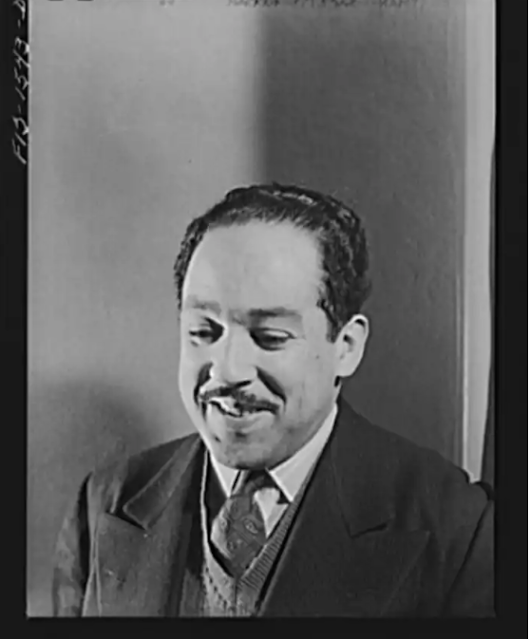
Everybody will read two very different classics of American literature: Charlotte Perkin Gilman's short story "The Yellow Wall Paper" and Langston Hughes' poem, "Let America be America Again."

We will discuss both works in our next class on Thursday, October 14. Your assignment is to read both of these works very carefully and be prepared to discuss your thoughts, feelings, and interpretations about them. 

You will have the choice to write your literary analysis on either Gilman's story or Hughes' poem, but not both. 

Your essay should be approximately 1,000 words or three full double-spaced MLA-style pages. This might seem like a lot, but it truly isn't.

Do you want to meet with me for a one-on-one tutorial? I'd love that. Send me an email message to csmith@dcad.edu.


MODULE SCHEDULE

Oct 12: Introduction of the new unit, assign reading.

Oct 14: Reading quiz, discussion. Outlining draft.

Oct 19: Finished Draft Due no later than 3 pm (Upload to Populi). This is required, not optional. It will count for half of your final grade. 

Oct 21: FINAL essay due no later than 3 pm (Upload to Populi), Critique.

Tuesday, October 5, 2021

18 Tips for Telling a Story through Artwork

This is a pretty great website from the UK.

These tips give you practical considerations to think about. How can a single image "tell" a complex story like Lispector's "Amor"?

Most if not all of the art and design featured on this site is generated digitally. Remember that you are free to use traditional methods. When it comes to uploading, take a careful and professional picture of it. Better yet, use a scanner if you have access to one. 


Lispector "Bonus" Stories

Some of you might really love short fiction and want to read more stories by Clarice Lispector. Here are two free stories for your reading enjoyment. Note: This is not an assignment.

Illustrating Clarice Lispector's "Amor"

This two-part assignment is essentially an exercise in 

1) Illustrating Clarice Lispector's story with a single image (upload as PDF, JPEG, or Docx); 

2) Writing a short text (two or three paragraphs, 300 words approximately) explaining how exactly your visual depiction connects to the story. What decisions did you make? Why?  Proofread this document carefully. Upload as a docx file. 

It might seem like the second part, the writing, is in fact secondary. This is not true. Both parts will be equally weighted.

Below is an illustration of "Amor" by an anonymous artist. Under the illustration is the passage in the story that the artist chose to illustrate. 


It might be helpful to think of your illustration as a book cover. If you choose this option, feel free to include the author's correctly-spelled name and the title of the story: either the original Portuguese "Amor" or the English translation, "Love." You could also think about combining keywords, sentences, or short passages from the story as part of your image. You have a lot of choices.

Remember that your illustration doesn't have to be a realistic or cartoon-like drawing. It could be an abstraction, a photograph, a collage of appropriated magazine images, a typographical "visual poem," or the many other visual forms I'm forgetting right now. Get creative! You're in art college!

I really want high-quality results, so we're extending the final due date until Tuesday, October 12. 

Upload both the draft (parts 1 and 2) and the final (parts 1 and 2) on Populi. Let me know if you have questions or difficulties with the upload. 

Finished Draft (both parts) Due:
No later than 3:00 pm on Thursday, October 7

New Final Due Date: 
No later than 3:00 pm on Tuesday, October 12

Questions: csmith@dcad.edu


Tuesday, September 28, 2021

Module 3: Text/Image


Clarice Lispector was a fascinating writer. Even though she is still virtually unknown in America, she was the biggest star in Brazil's literary world of the whole 20th century. 

For our next class on September 30, read the texts on the links below. The first is the story itself, the second is a response to the story in academic prose. The last link is from the publisher of her short stories. Altogether, plan to devote about 90 minutes to the readings before class on Thursday. There might be a quiz. 


Academic Essay about Lispector's story, "Love".

______________________________________

Familiarizing yourself with this particular Clarice Lispector story is the first step for this module's assignment. Pay special attention to the language and the imagery. As you're reading the story, copy down passages that you find striking: maybe they're highly visual passages, maybe there's something surrealistic about her use of language in a particular passage, maybe it's something else that intrigues you.  

The second step is to create a visual representation of some aspect of this story. This genre is sometimes called a broadside, sometimes a poster, sometimes a visual poem. Think of it as an interpretation of the story that operates primarily by visual means. This could be your own drawing (freehand or computer-assisted), painting, collage, photography, typographic design, etc. It can be black and white or color (or both). Some students in the past liked to incorporate a brief passage, kind of like a caption, that anchors the artwork. 

The third and final step is for you to write a brief text (1-3 paragraphs, 200-300 words) that describes the process of you making the image and the intention behind it. What does it mean to you? Write it down.

Module Schedule

Thursday, Sept 30: Discussion of the story, initial                                   brainstorming. 
Tuesday, Oct 5:     Draft of broadside due, workshop.
Thursday, Oct 7:     2nd draft of Broadside and Text                                due no later than 3:00 pm.                                            Upload to Populi.

Tuesday, October 12: Final Due

Questions: csmith@dcad.edu

Leaves and Paragraphs


Above you see six different renderings of a leaf, leaves, or leafiness. Any favorites?

Below we're going to give close readings of paragraphs from different student essays. The names of the authors have been removed. Can you tell if it's an introductory paragraph, a body paragraph, or a concluding paragraph? What features tell you? 

Write something positive about each paragraph Be specific as possible. What could be improved? Again, be as specific as possible. Lastly, do you see any mistakes in grammar, spelling, punctuation, etc. ? Mark all of these things in the handy worksheet that I will hand out at the start of our critique.
             1.
                                       
                            2.


                            3.


                            4.

                                5.


                            6.


                        7.


                        8.


                        9.


                    10.  


Thursday, September 23, 2021

What are the generic features of a TED talk?

The most famous graphic designer of the last half of the 20th century was Milton Glaser. His portrait of Bob Dylan, below, is perhaps his most well-known work.


Glaser gave a TED talk back in 1998 when TED talks were a fairly new thing. In the 23 years since Glaser's talk TED talks have become a really big deal. Amy Cuddy's 2012 TED presentation about body language has been viewed more than 62 million times. The only TED talk with more views is Ken Robinson's wonderful "Do Schools Kill Creativity" talk from 2006. 

How have the genre conventions of a TED talk evolved from 1998 to 2012? What good is knowing a particular work's genre conventions? What's the point?

Take a look at this academic essay about the genre conventions (frequent features) of a TED talk.